Your first coast path run: nine things nobody tells you
Coastal running is not road running with a view. Here is what surprises people on their first go, and how not to have a miserable time.
Beginner adviceHit the Coast · Sunday, 2 August 2026 · 5 min read
If your normal run is 10K in fifty minutes, your first 10K on the coast path might take you an hour and a half. This is not a fitness problem. It is what the terrain does, and knowing that in advance is most of the battle.
The nine things
- Distance lies. Ascent tells you more. Ten kilometres with 500m of climbing is a completely different afternoon from ten flat ones.
- Walking the climbs is normal. Experienced ultrarunners walk the steep bits. You are allowed to as well.
- The wind is the weather. It will be stronger on the cliff top than it was in the car park, and a headwind on an exposed section is genuinely tiring.
- Steps are everywhere and they are never a consistent height. Shorten your stride and look two steps ahead, not at your feet.
- You will not get phone signal in the dips. Tell someone where you are going and when you expect to be back.
- Take more water than you think. There is often nothing between villages, and sea air is dehydrating.
- Wet rock, wet grass and wet chalk are all much more slippery than wet tarmac. Slow down on descents before you have to.
- The tide closes beaches and low paths. Check it. It is a thirty-second job and it has ended a lot of otherwise nice days out.
- Carry a light jacket even when it looks fine. Coastal weather turns quickly and the path rarely offers a fast way inland.
A sensible first route
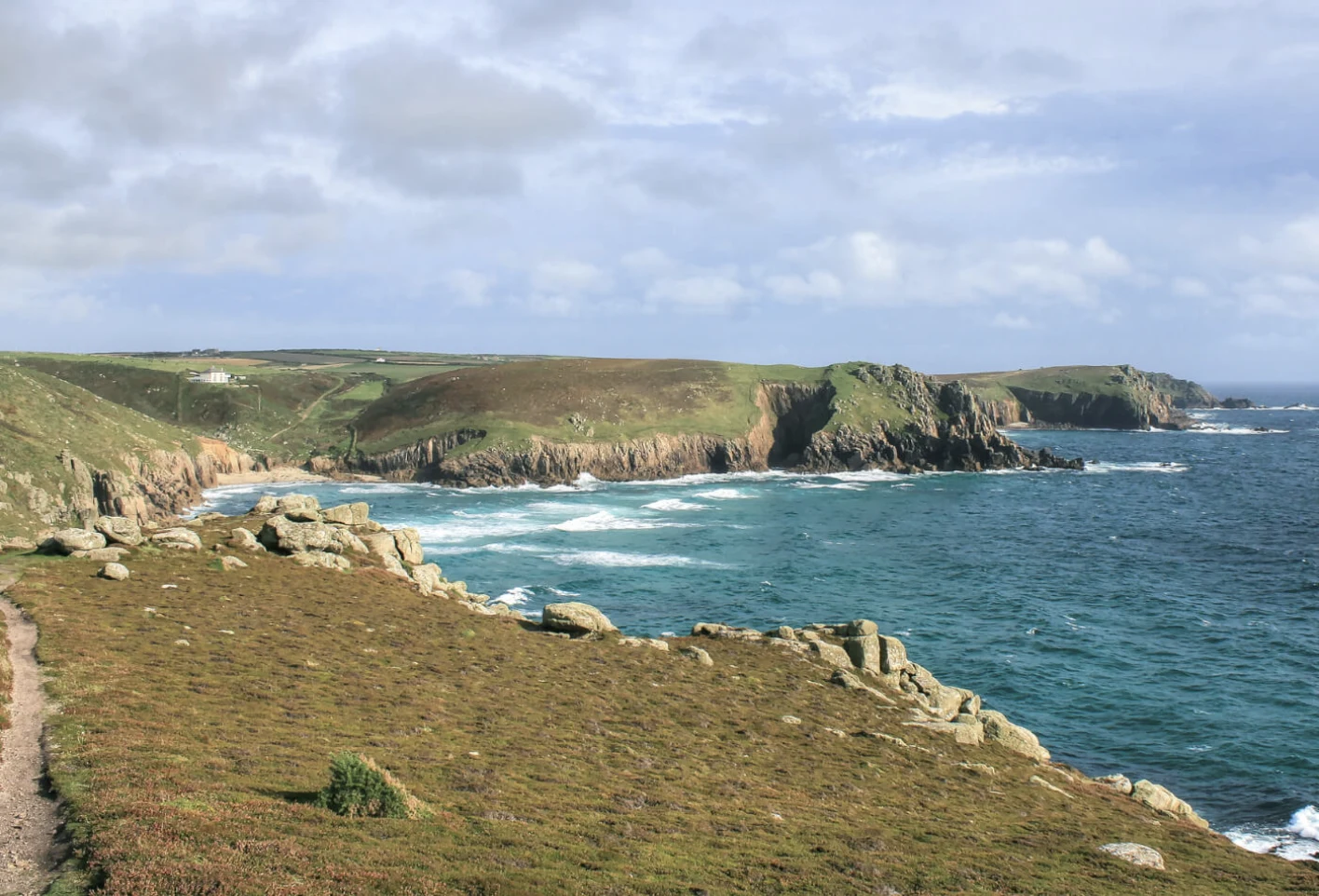
Pick something short, out-and-back and near a car park, so you can turn round whenever you want. Land’s End to Sennen is our standard recommendation in west Cornwall: under 10K, a clear path, and a beach and a café at the end of it.